


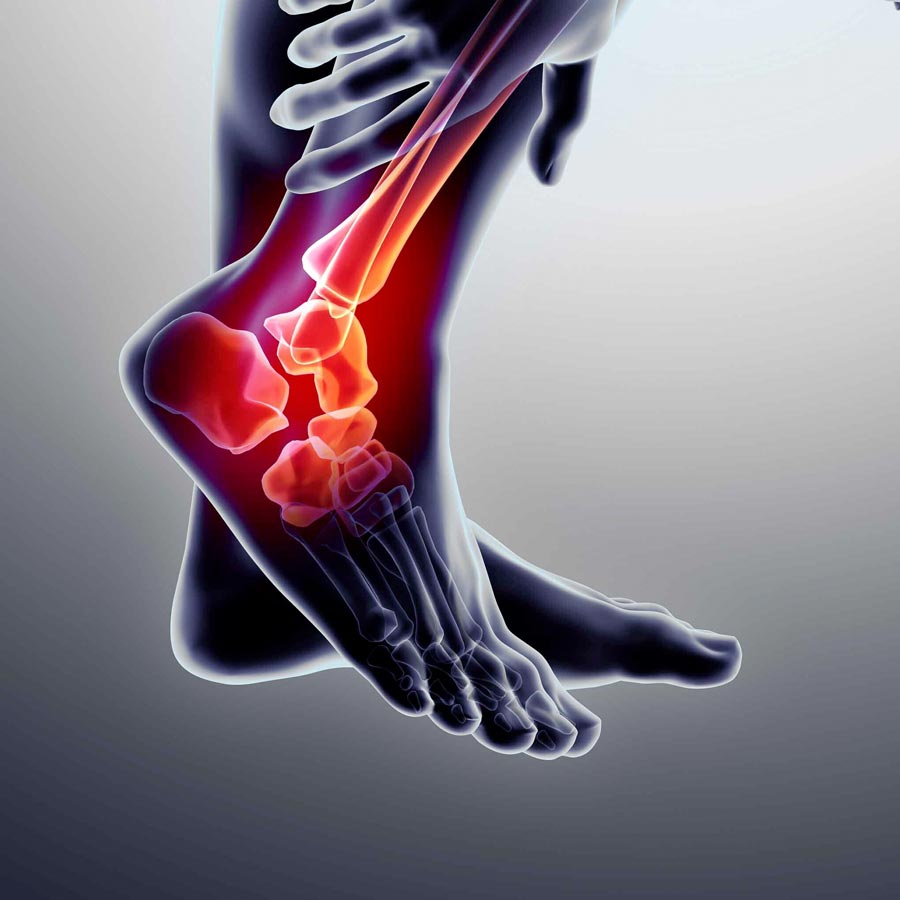
If the first few steps out of bed are the worst part of your day, you probably have plantar fasciitis. That specific pattern — sharp heel pain in the morning that eases after a few minutes of walking, then returns after sitting — is so characteristic that it is often the single most useful piece of information in the diagnosis. Understanding why it behaves that way also explains what actually makes it better.
Why Those First Steps Hurt Most
The plantar fascia is a thick band of connective tissue running from your heel bone to the base of your toes, acting as a tension cable that supports the arch of your foot. When it is irritated at its attachment on the heel, the tissue attempts to repair itself overnight — but it does so while your foot is relaxed and the fascia is shortened, because most people sleep with the foot pointed. The first steps in the morning suddenly stretch that freshly-knit tissue under full body weight, and it tears slightly again. That is the stab you feel. Once you have been walking a few minutes, the tissue has stretched out and warmed up, and the pain subsides — until you sit long enough for the same cycle to restart.
What Causes It
Plantar fasciitis is a load problem: the demand on the tissue exceeded its capacity to recover. The contributing factors are usually a combination rather than a single cause:
- A sudden increase in standing or walking — a new job on your feet, a move to less supportive shoes, or ramping up running volume too quickly
- Tight calves and Achilles tendon — limited ankle flexibility forces the arch to absorb more, and this is one of the most consistently found factors
- Foot mechanics — both very flat and very high arches change how the fascia is loaded
- Worn or unsupportive footwear — particularly flat shoes with no heel rise and shoes past their useful life
- Weight gain — the fascia carries a load proportional to body weight with every step
- Restricted motion up the chain — stiff ankles, knees, or hips change your gait and shift load onto the foot
What Actually Helps
Plantar fasciitis responds well to conservative care, but it is slower than most people expect, and the treatments that work are the dull ones done consistently:
- Calf and fascia stretching — particularly before the first steps of the morning, done seated at the edge of the bed rather than standing
- Loading the tissue progressively — slow, heavy calf raises with the toes extended are better supported by evidence than stretching alone, because the tissue needs to be rebuilt, not just lengthened
- Manual therapy to the foot, ankle, and calf to release restriction and restore normal joint motion
- Footwear and support change — shoes with a modest heel rise and real arch support, worn even indoors during a flare
- Addressing the chain above — restricted ankle, knee, hip, or low back mechanics that are altering your gait
- Load management — reducing, not eliminating, the activity that is provoking it while capacity rebuilds
Why the Rest of Your Body Matters
Heel pain rarely exists in isolation. A stiff ankle, a weak hip, or an altered walking pattern after a back or knee problem all change how force travels through the foot. People commonly develop plantar fasciitis on one side only, and the asymmetry is often traceable upstream. That is why an examination for heel pain is worth extending above the ankle — treating only the sore spot tends to produce temporary relief followed by recurrence once normal activity resumes.
How Long It Takes
Be prepared for a longer timeline than a typical muscle strain. Many cases improve meaningfully within six to twelve weeks of consistent care, and more stubborn ones take several months. The honest reason is that connective tissue has a poor blood supply and remodels slowly, and the foot gets loaded thousands of times a day no matter how careful you are. The encouraging part is that the large majority of cases resolve with conservative care and never require injection or surgery.
Common Questions
Is a heel spur the cause of my pain?+
Usually not. Heel spurs are common findings on X-ray in people with no pain at all, and plenty of people with classic plantar fasciitis have no spur. The spur is better understood as a consequence of long-standing traction on the heel bone than as the source of the symptoms. Treatment is aimed at the fascia and the loads acting on it, not at the spur.
Should I stop walking or running entirely?+
Complete rest usually is not the answer, because the tissue needs load to remodel and deconditioning creates its own problems. The approach is to reduce volume to a level that does not leave you markedly worse the next morning, substitute lower-impact activity for part of it, and rebuild gradually. Pain during activity that settles quickly afterward is generally acceptable; pain that is clearly worse the following day means the dose was too high.
Do I need custom orthotics?+
Not necessarily. Good over-the-counter inserts perform comparably to custom devices for many people with plantar fasciitis, and they are a reasonable first trial. Custom orthotics make more sense for significant structural foot differences, notable leg-length asymmetry, or cases where off-the-shelf support has been given a fair trial without benefit.
The Bottom Line
Plantar fasciitis is a tissue-capacity problem with an unusually recognizable pattern, and it gets better with a combination of restoring motion, progressively rebuilding the tissue’s tolerance, and fixing the loads that overwhelmed it in the first place. What it does not respond to is waiting it out while continuing everything that caused it.
If your heel hurts every morning, you do not have to live with it. Learn more on our plantar fasciitis page, or call 386-400-3620 or book an appointment online.
